Engine repair
Boat engine repair on Shasta Lake
Most engine calls on this lake come down to one of three things: a motor that overheats, a motor that will not run right, or a motor that will not run at all. The mechanic comes to the boat, works on it where it floats or sits on the trailer, and on Shasta that is usually the only way it gets done, because a houseboat and a slipped ski boat are not going to a shop. Inboard, sterndrive, or outboard, the summer heat up here is what turns a small fault into a ruined weekend.
The heat is the story
Redding runs past 100 and deep into the 110s for weeks at a stretch, and that heat is the single hardest thing on a marine engine in this county. A cooling system that would limp along on a mild coastal lake simply cannot keep up here. The most common on-the-water failure on Shasta is overheating, and the part behind it is almost always the raw-water pump impeller, a small rubber wheel that pulls lake water through the engine to carry heat away.
An impeller gets brittle with age and heat whether you run the boat hard every weekend or leave it sitting. When it starts shedding vanes, water flow drops, the temperature climbs, and if you keep going you can cook a head gasket, warp a head, or seize the motor. The fix itself is modest when it is caught in time. Changing the impeller every season or two is the cheapest insurance you can buy against a mid-lake breakdown, and in this heat that interval is not optional. See the boat repair cost page for what an impeller job runs.
Overheating is not always the impeller, though, and that is where a diagnosis earns its keep. A clogged raw-water intake, a tired thermostat, a failing circulating pump, a collapsed hose, or an exhaust elbow packed with rust and scale can all drive the temperature up. On an inboard, salt is not the enemy here, but mineral scale and age still choke exhaust risers and manifolds over time. The mechanic checks flow and temperature at the source rather than guessing, because replacing an impeller that was fine does nothing for a thermostat that is stuck shut.
Temperature gauge climbing on the water? Shut it down and call before you nurse it back to the ramp.
Fuel, ethanol, and a boat that sits
The second big category is fuel. Modern pump gas carries ethanol, and ethanol pulls in moisture and goes stale faster than most owners expect. A boat that sits between weekends, or sits for a whole off-season, ends up with fuel that has separated or turned to varnish. That gums carburetors, clogs injectors, fouls filters, and leaves you cranking an engine that will not catch or that stumbles and dies under load. On Shasta, where a lot of boats get used hard for a short season and then parked, stale ethanol fuel is behind a large share of the running problems the mechanic sees.
The cure is usually a matter of draining bad fuel, cleaning or rebuilding the carburetor or servicing the injectors, swapping filters, and getting fresh stabilized fuel through the system. It is not glamorous work, but it is common, and it is a lot cheaper than the rebuild an owner sometimes fears when the motor will not fire. If your boat simply cranks and will not start, the won't-start page walks through the no-start checklist in more detail.
Ignition, electrical, and running rough
When an engine runs but runs badly, misfiring, hesitating, losing power, or dying at idle, the trail usually leads to ignition or electrical. Fouled or worn spark plugs, cracked plug wires, a weak coil, a failing ignition module, or corroded grounds all show up as a motor that just is not happy. Heat and vibration age these parts, and marine electrical connections live in a damp, corrosive spot that ground-based engines never see. A mechanic tracks down whether it is spark, fuel, or air, tests the components, and replaces what has actually failed rather than throwing parts at it.
Older two-stroke and four-stroke outboards, inboard V-drives, and sterndrive V6 and V8 blocks each have their own habits, and a mechanic who works this lake knows the ones that turn up on Shasta. A rough-running motor caught early is a tune-up; ignored, it is the boat that strands you.
Tune-ups and annual service
The cheapest engine work is the work you schedule. An annual service runs $400 to $600 per engine plus parts, and it covers the things that fail from neglect: plugs, fluids, filters, fuel system, water pump and impeller, belts, and a real inspection of hoses, clamps, and the cooling path. Spending that in the spring is how you avoid spending far more on a hot July afternoon when a skipped impeller finally lets go in the middle of the lake. On a lake with a short, hot, intense season, prevention is simply the cheap path, and the winterizing and spring service page covers the other half of that calendar.
Inboards, sterndrives, and outboards
Ski and wake boats are everywhere on Shasta, and many of them run inboard motors, a marinized car engine driving a straight shaft. Inboards are reliable but live in a hot, tight engine box, so cooling and exhaust get the hardest use. Sterndrives, sometimes called I/O for inboard-outboard, put that same block inside the transom and send power through an outdrive leg. They give you two systems to maintain, the engine and the drive, and the drive has its own service needs covered on the outdrive page.
Outboards hang on the transom and are often the easiest to get to, which keeps the labor down when the mechanic can walk right up to the powerhead. Whatever the layout, twin engines double the work, because you have two of everything to diagnose and service, and the visit runs longer accordingly. Tell the mechanic your boat, engine, and roughly what year when you call, so the right parts and manuals come out with the truck the first time.
Houseboat propulsion
Houseboats carry their own propulsion, often twin inboards or sterndrives pushing a lot of hull, plus a separate generator that runs the rest of the boat. The propulsion engines get worked on exactly like any other inboard or sterndrive, with the one enormous difference that the boat cannot be trailered anywhere, so every bit of it happens on the water. The generator is a separate engine and a separate job, covered on the generator service page. When you call about a houseboat, be clear about which engine is giving you trouble, the mover or the genset, so the right diagnosis starts on the phone.
On the water or on the trailer
Where the work happens depends on the boat and the problem. A trailer boat in Redding often gets serviced right in the driveway, which is the simplest visit of all. A slipped boat or a houseboat gets worked on at the dock or on a buoy. Some jobs, a quick impeller or a tune-up, run water through the motor easily at the slip; others want the boat on a trailer with a hose or on muffs so the mechanic can run it up and load it. And a handful of problems, a suspected powerhead failure or transom damage, cross the line into boatyard work that needs the boat hauled out, which no honest mechanic will pretend to do at your slip. When that happens you get told plainly rather than charged for a trip that cannot fix it.
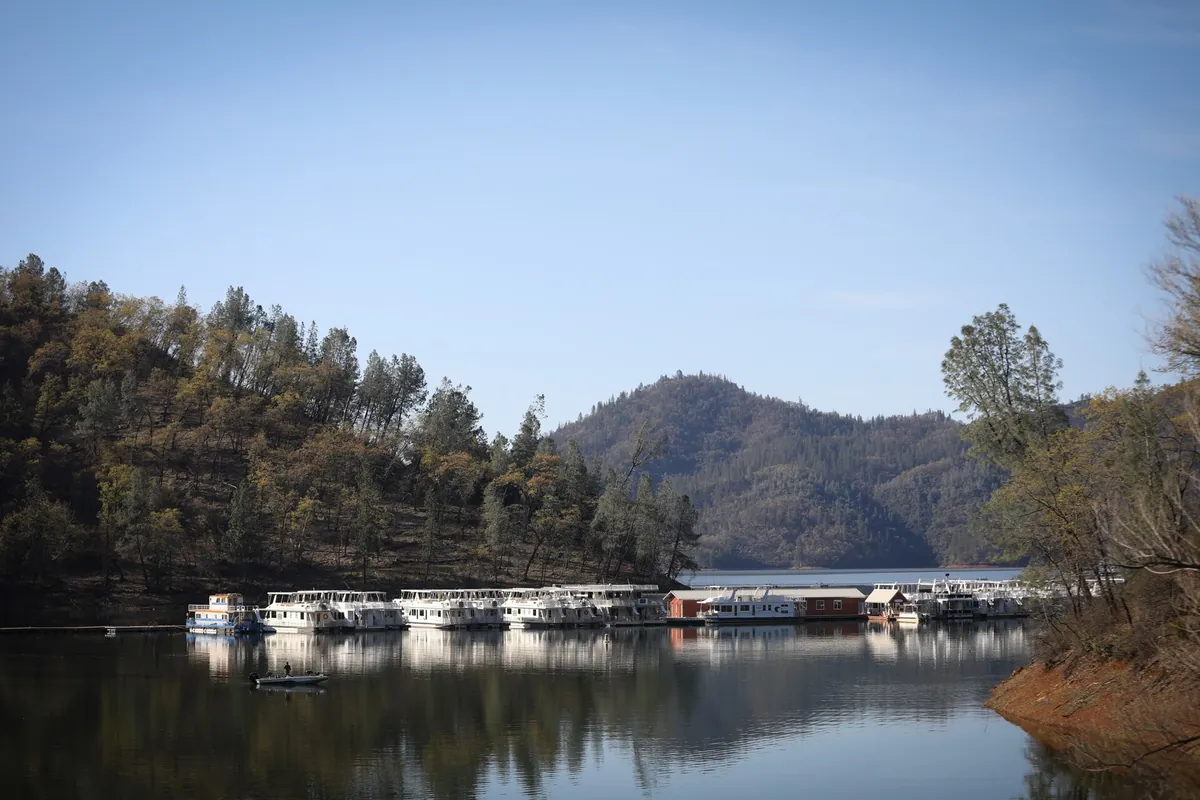
Tell the mechanic where the boat lives when you call, up at Lakehead on the upper arm, central at Bridge Bay, or on the trailer in Redding, and whether it is slipped, on a buoy, or on the trailer, so the trip and the plan fit the boat.
Overheating, stalling, or a motor that just is not right? Describe it and get a straight answer.
Engine repair questions
How do I know if it is the impeller or something worse?
You often cannot tell from the helm, which is exactly why it gets diagnosed rather than guessed. Low or no water flow at the exhaust with a climbing temperature points at the impeller or the raw-water side, but a thermostat, a blocked intake, or a bad exhaust elbow can look the same from the driver's seat. The mechanic checks flow and temperature at the engine and replaces the part that actually failed. The one thing you should do yourself is shut the motor down the moment the gauge spikes.
My boat sat all winter and now runs rough. What is likely wrong?
Nine times out of ten it is the fuel. Ethanol gas that sat for months absorbs water and turns to varnish, which gums carburetors, clogs injectors, and fouls filters. The fix is draining the old fuel, cleaning the fuel system, fresh filters, and stabilized gas, not a new engine. Getting on it early keeps it a fuel-system service instead of a bigger teardown.
Can twin engines be done in one visit?
Usually yes, but plan on it taking about twice as long as a single, because there are two of everything to diagnose and service. If only one engine is acting up, say so on the phone so the mechanic can focus there. If you want both serviced, that is a longer appointment and worth scheduling ahead rather than as an emergency.
Do you rebuild engines on the water?
Major internal work, a powerhead rebuild, a cracked block, or transom damage, is generally a boatyard job that needs the boat out of the water, and it does not get a flat quote sight unseen because the price depends entirely on what the teardown finds. A mobile mechanic handles the large majority of engine repairs at your slip and tells you honestly when a problem has crossed into haul-out territory, rather than driving out to quote something that cannot be done there.
Should I run the boat back to the ramp if it overheats?
No. The damage from running a marine engine hot climbs fast, so nursing it back under power is how a cheap impeller turns into a warped head. Shut it down, get a tow or a paddle to safety if you can, and call. A motor stopped quickly at the first temperature spike usually comes through fine.
Get connected with a local mobile marine mechanic.