Won't start
Boat won't start on Shasta Lake
You turn the key, the family is loaded, the cooler is packed, and nothing happens. Before you picture a rebuilt engine and a wrecked weekend, know this: the large majority of no-start calls on this lake end with a cheap part and a same-visit fix, not a dead motor. Dead batteries, a corroded connection, a tripped safety switch, or stale fuel account for most of them. A mechanic can come to your slip or your driveway, find which one it is, and usually have you running the same trip.
Start with the battery, because it is usually the battery
Heat kills batteries, and Shasta hands them a double dose of it. A battery baking in an engine box through a 110 degree summer, then sitting through storage, loses capacity fast, and marine batteries lead a harder life than car batteries to begin with. The single most common reason a boat will not start on this lake is simply not enough juice: a battery that is old, discharged from something left on, or cooked past the point of holding a charge.
Right behind a weak battery are the connections to it. Marine terminals live in a damp, vibrating spot, and they corrode, loosen, and build up resistance until the starter gets a trickle instead of a jolt. A boat that clicks, cranks slowly, or works one day and not the next is often fighting a corroded or loose connection rather than a bad battery at all. Cleaning and tightening terminals, or replacing a battery that will not hold, is a quick, inexpensive fix, and it is where the mechanic looks first for a reason.
Dead at the dock with the boat loaded? Describe what it does when you turn the key.
The safety switches that stop a good engine cold
Boats are built to refuse to start unless a few safety conditions are met, and those systems strand more healthy engines than owners realize. The kill-switch lanyard has to be clipped in; if the clip is missing, worn, or the switch is dirty, the engine will not fire even though nothing is wrong with it. The neutral safety switch stops the boat from starting in gear, so a shifter not quite in neutral, or a worn switch, blocks the start. These are the good-news calls, because the engine was fine all along, but they still take someone who knows to check them before tearing into anything.
Blown fuses and tripped breakers belong in the same category. A single failed fuse in the ignition or start circuit will leave you with a silent boat and a perfectly good motor. A mechanic runs through these simple gates first, which is exactly the order that saves you money.
Stale fuel, the classic after it sits
The other great no-start cause on Shasta is fuel that went bad while the boat sat. Ethanol pump gas pulls in moisture and turns to varnish over a season, and a boat that gets used a few weekends and then parked is the perfect setup for it. Come the next outing, the engine cranks fine on a good battery but will not catch, or catches and dies, because the carburetor is gummed, the injectors are clogged, or the fuel filter is packed with the sludge stale gas leaves behind. This is the classic case of a boat that started fine in the fall and refuses in the spring.
The fix is draining the bad fuel, cleaning or rebuilding the fuel system, fresh filters, and stabilized gas, the same fuel work covered on the engine repair page. It is not a small job like a battery, but it is a long way from a new engine, and once it is sorted the boat runs like itself again.
Ignition and the rest
When the battery is strong, the safety gates are clear, and the fuel is fresh, the trail moves to ignition: fouled plugs, a weak coil, cracked wires, a failing ignition module, or corroded grounds that leave the spark too weak to light the motor. These take testing to pin down, and they are why a mechanic diagnoses rather than guesses. The point of the order is simple: check the free and cheap things first, so you are never paying for ignition parts when the real problem was a fifteen dollar fuse or a loose battery terminal.
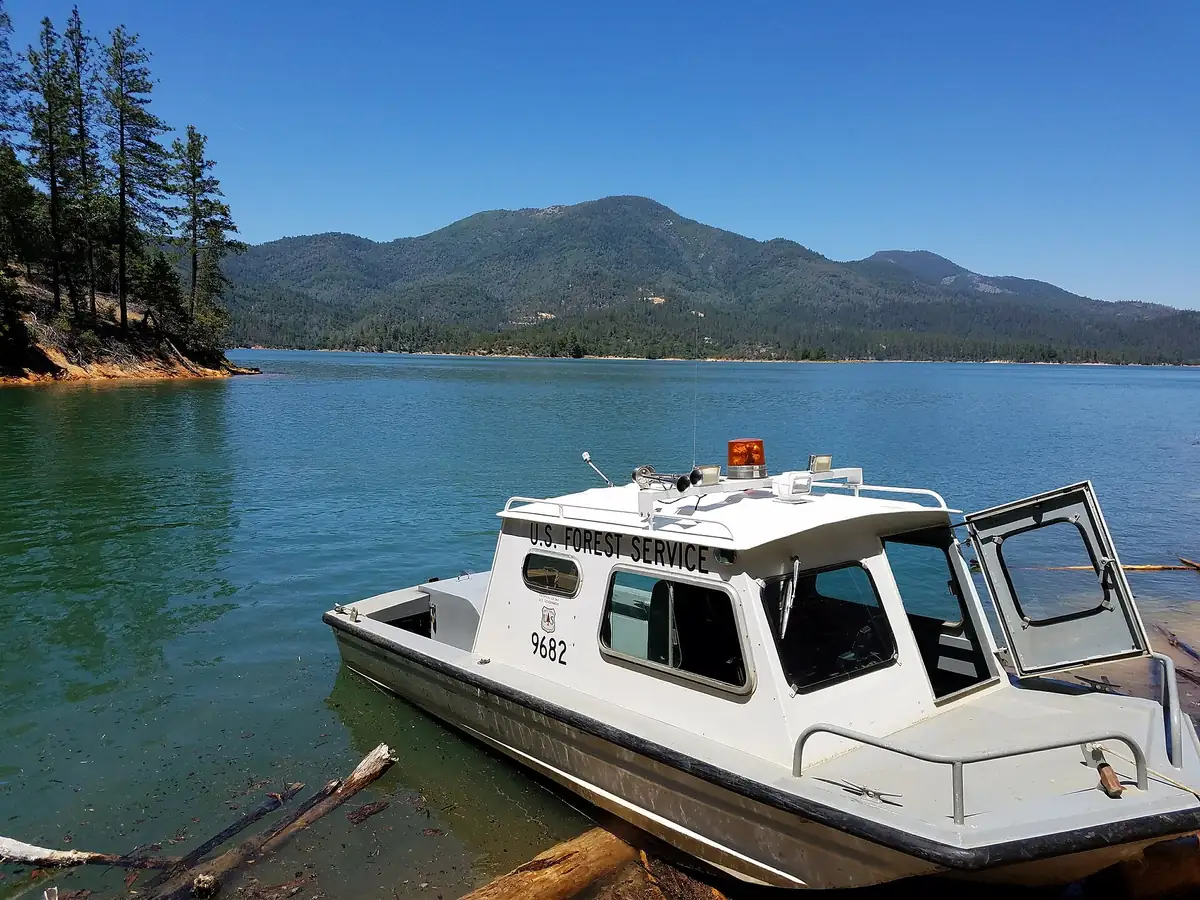
Usually a cheap fix, not a dead engine
It is worth saying plainly, because a silent boat feels like a catastrophe and it almost never is. A no-start is the symptom with the widest range of causes and the lowest average cost, precisely because so many of those causes are batteries, connections, switches, and fuel rather than the engine itself. You pay the trip fee and usually an hour of labor, which can feel like a lot for what turns out to be a cleaned terminal, but the flip side is that you walk away knowing the motor is sound. A mechanic who checks the simple things before quoting a big repair is saving you money, not padding the bill, and the boat repair cost page shows where a no-start visit lands.
Come to your slip, same visit
The whole appeal of a no-start on this lake is that it comes to you and usually gets solved on the spot. The mechanic arrives at your dock, your buoy, or your driveway in Redding with a stocked truck, runs the checklist in the order that finds the cheap stuff first, and in most cases has the boat running before leaving. A trailer boat in town is the simplest visit of all; a slipped boat or a houseboat gets the same treatment right where it floats, which matters because a houseboat is not going anywhere else to get looked at. Tell the mechanic where the boat is, up at Lakehead, central near Bridge Bay, or on the trailer in Redding, and exactly what happens when you turn the key, so the right parts come out the first time.
Turn the key and get a click, a crank, or nothing? Describe it and get a straight answer.
No-start questions
It clicks when I turn the key but will not crank. What is that?
A click almost always means the starter is trying but is not getting enough power to turn the engine over, which points at a weak battery or a corroded, loose connection between the battery and the starter. Sometimes it is the starter solenoid itself. It is rarely the engine, and it is usually one of the cheapest fixes there is. Tell the mechanic you are getting a click, because it narrows the search right away.
The engine cranks fine but will not fire. Now what?
Good cranking means the battery and starter side are healthy, so the problem is on the fuel or spark side, no fuel, bad fuel, or no ignition. After a boat has sat, stale ethanol gas is the leading suspect. The mechanic checks whether it is getting fuel and spark and works from there. Cranking well is actually good news, because it clears the electrical start system.
Could it really be something as small as the kill switch?
Yes, and it happens more than you would think. A missing or worn kill-switch lanyard, a shifter not fully in neutral, or a dirty safety switch will stop a perfectly good engine from starting. These are the best outcomes, because nothing is actually broken, but they still need someone to check them in the right order rather than assuming the worst.
Can you jump it and let me go, or do I need a new battery?
Depends on why it died. If a light was left on and the battery is otherwise healthy, a charge or a jump may get you going, though the mechanic will want to know what drained it. If the battery is old and cooked from the heat, it will not hold and a jump only buys you the ride back, so replacing it is the real fix. Testing the battery tells you which it is instead of guessing.
My houseboat will not start way up the arm. Can you still come?
Yes. A houseboat cannot be trailered in, so a mechanic coming to it is the only option, no-start or otherwise. Say which marina or arm it is moored in and whether it is at a dock or on a buoy so the trip is planned right. The far arms carry a bigger trip fee for the real drive and water time, but the visit and the fix happen right where the boat sits.
Get connected with a local mobile marine mechanic.